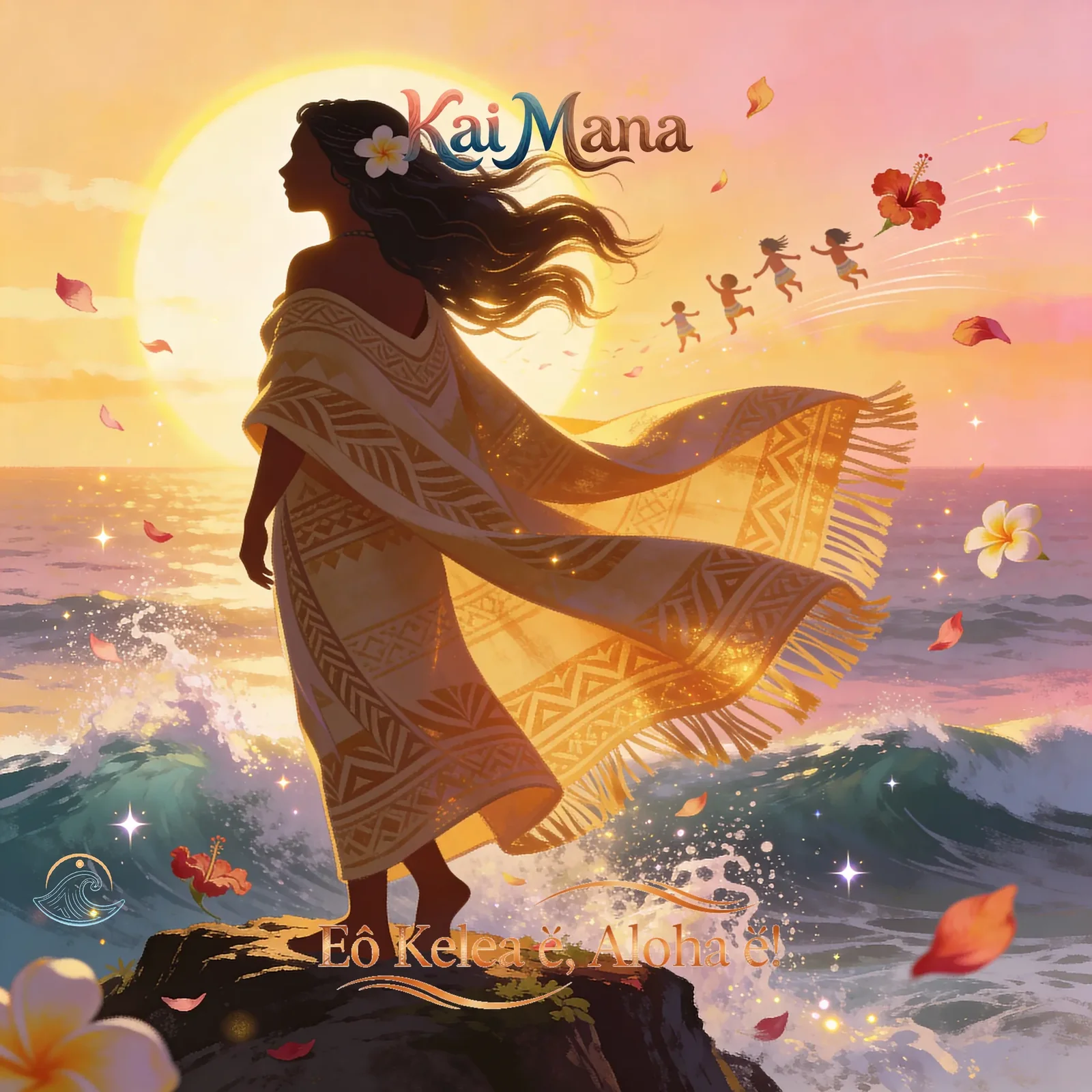
The Feeling Inside "Eo Kelea E Aloha E"
A voice calls out across the bay — "Eō e, eō e!" — and another answers from the far canoe. The water is calm, the sun is high, and the call bounces from bow to bow like something between a greeting and a game that has been played for centuries.
Where the opening track of Chants was ceremony, this one is connection. The call-and-response form — eō, the traditional cry of recognition — is how Hawaiians announced arrival and acknowledged presence. Here it becomes a tribute to Kelea, the surfing chiefess, and the mood shifts from reverence to warmth without losing an ounce of respect.
Where the Song Takes You
Keleanuinohoanaʻapiʻapi — Kelea — was a Maui high chiefess who chose the waves over the court. Where royal protocol demanded stillness, she paddled out. Where rank demanded distance, she surfed. The chant honors her not as a figure in a museum but as a presence still riding the swells she loved.
The title phrase itself is the protocol: "Eō" is the call — behold, answer, here I am — and the response affirms her title: "Aliʻi wahine o ke kai ē" — princess, chiefess of the sea. The giant open-ocean swells, nalu nui kai loa, are not dangers in this chant. They are her realm, the place where she was most free.
In the album's arc, this is the moment the ceremony opens its doors. The first track established that Kai Mana speaks with ancestral authority; this one shows what that authority sounds like when it smiles. The ocean is not only sacred — it is also where joy lives.
How It Sounds
Buoyant and bright. The ipu heke keeps a slapping, wave-like pulse — unhurried but swinging, like paddling rhythm on flat water — while deep pahu thuds punctuate the downbeats. At ~52 BPM half-time pulse it moves noticeably faster than the opening ceremony — the ipu and pahu subdividing at ~104 BPM double-time, an oceanic lilt that keeps the whole thing afloat.
The vocals trade back and forth in true call-and-response: a male lead caller issuing the greeting, the full choir answering in melodic unison. The delivery balances regal formality with genuine playfulness — this is a royal tribute, but one sung from a canoe, not a throne room. The final refrain fades over calm water sounds, the voices dissolving back into the bay they came from.
The Journey Through the Song
- 0:00 – 0:18 · Call of Recognition The first eō Light gourd percussion enters; the caller issues the greeting: "Eō e, eō e / Kia oe oe oe..." — the traditional announcement of arrival, echoing across the water.
- 0:19 – 0:42 · The Royal Proclamation Chiefess of the sea The choir answers in unison: "Aliʻi wahine o ke kai ē / He inoa no Kelea ē / Nalu nui kai loa..." — her name, her title, her giant swells.
- 0:43 – 1:12 · Interlocking Call & Response The paddling groove The chant accelerates into rhythmic interlocking layers — caller and chorus trading phrases like paddlers trading strokes: "Aloha Kelea / Aloha Kelea..."
- 1:13 – 1:39 · Warm Climax & Ocean Echo The final unison One last full-voice declaration — "Aliʻi wahine o ke kai ē... Aloha ē" — then the voices fade into warm resonance over calm water, the bay keeping the echo.
Images the Song Carries
- call and response
- island breeze
- soft momentum
- light voices
Moments to Catch
Lyrics
Chorus: "Eō e, eō e!" (Behold, behold!)
Leader: "Aliʻi wahine o ke kai ē!" (Princess of the sea!)
Chorus: "He inoa no Kelea ē!" (A name song for Kelea!)
Leader: "Nalu nui, kai loa—" (Great waves, wide ocean—)
Chorus: "Aloha ē!"